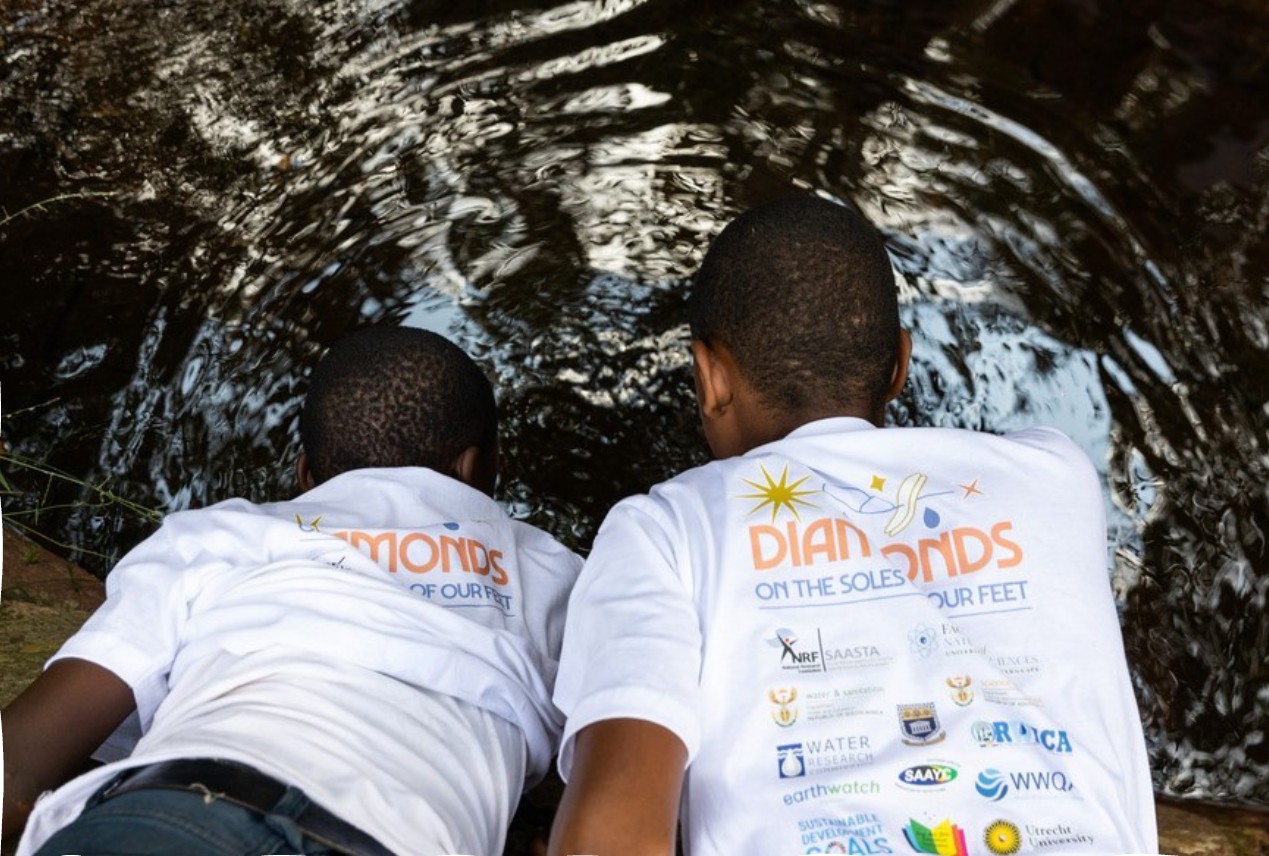
Diamonds on the Soles of Our Feet: interview with Jaqui Goldin
Oct. 21, 2025, 7:59 a.m.
Water is life, but in many communities, access to clean water and understanding its importance remains a challenge. Diamonds on the Soles of Our Feet (DSF) is transforming this reality through citizen science and creativity. What started as a simple project measuring water levels has grown into a global movement that empowers schools, inspires young scientists, and reconnects communities with nature. In this interview with professor Jaqui Goldin, one of the founders of the project, we explore how DSF combines science, art, and education to create lasting change.
How did the project start?
We began in 2019 with Diamonds on the Soles of Our Feet by measuring water levels in boreholes and wells using simple dip meters. But the community soon became concerned also about the smell of the water, and that the quality isn’t good. They asked if we could also start looking at water quality, not just water levels, and also in rivers. And they especially asked if we could involve kids. So the project really took shape from the bottom up.
That request from the community transformed the project. We shifted from measuring water levels to monitoring water quality and launched a school program to promote water literacy in seven schools around the Limpopo, South-Africa. The goal was to reconnect children with nature and extend awareness beyond classrooms into households and communities. From the start, we used an approach called “Learning with the heart”.
What does the "Learning with the Heart" approach entails?
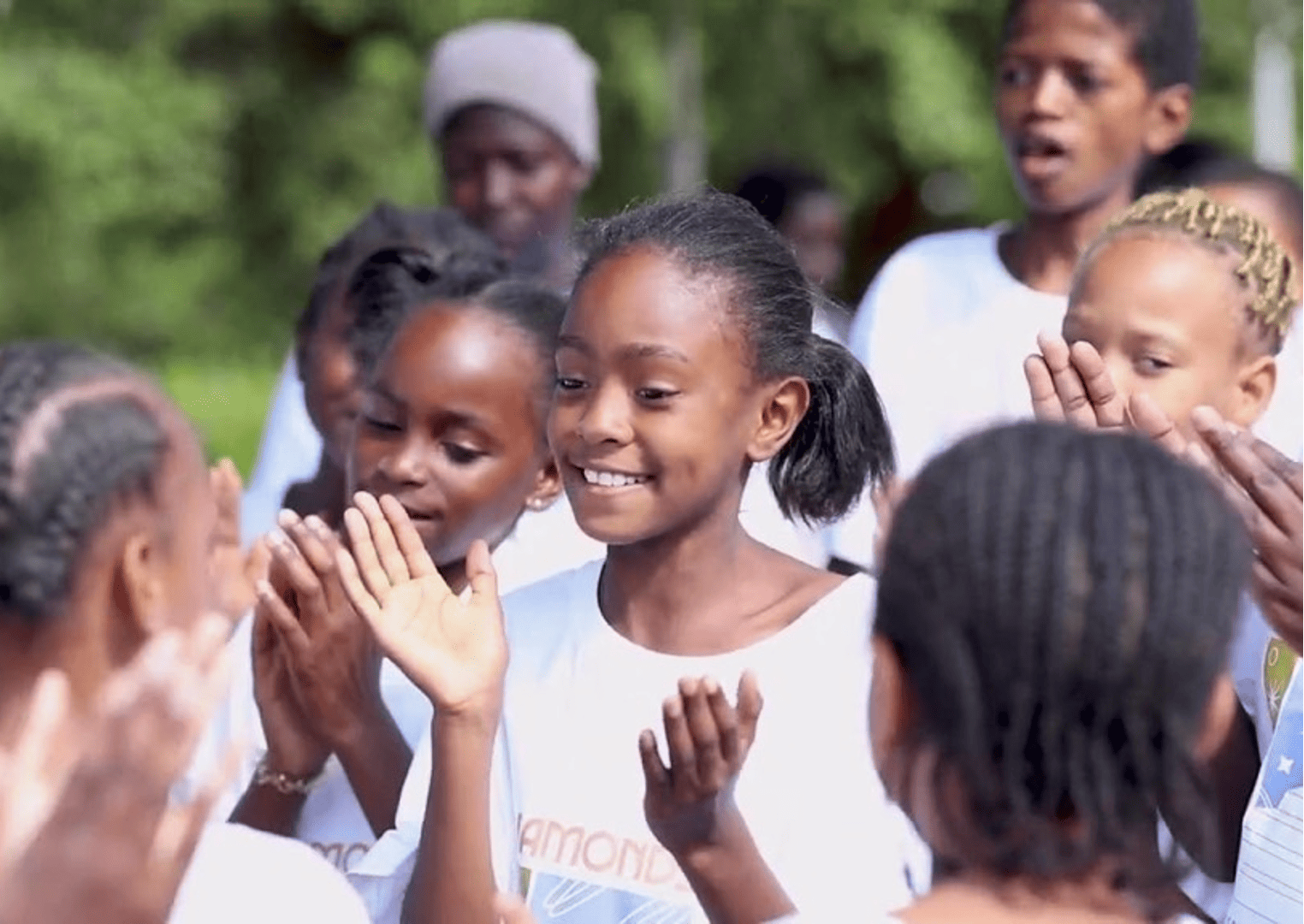
We realized that science alone wasn’t enough, after a while it can get quite dull for children. We felt children needed art, poetry, song, and dance to make their connection with nature tangible and lasting. The ‘Learning with the Heart’ model is based on the principle that “you can’t learn unless you feel.” This blend of art and science has become a cornerstone of our approach.
Where is the project active today?
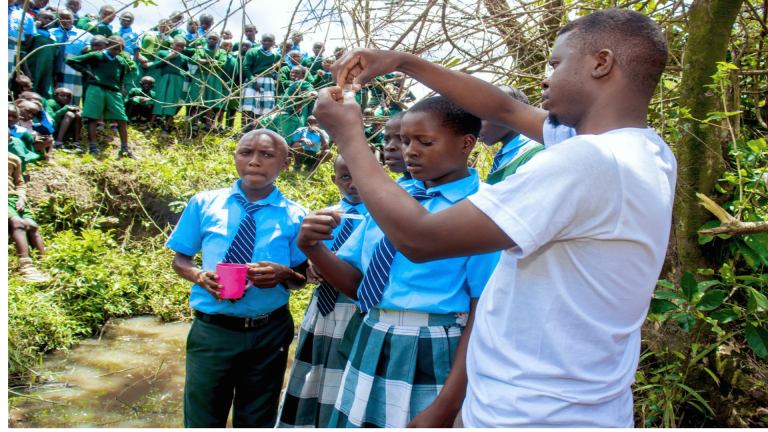
The project has gone global. We now have groups in Turkey, India, and Peru. They are tackling different challenges, for example in Peru the project is raising awareness about oil spills in fishing villages. Our current main focus, however, is Kenya’s Narok County, where we work with 20 schools near rivers. These schools lack laboratories, so the river becomes the laboratory. Students use the United Nations Freshwater Monitoring Kit to test nitrates, phosphates, and turbidity. This hands-on experience sparks excitement: “I didn’t know what a nitrate was—now I do, and I want to become a scientist!”
Which impact have you seen so far?
The main impact has been behavioral change. Children have become environmental advocates, telling parents not to use plastic bags because they harm fish and clog rivers. Schools now invite us enthusiastically, saying, “Our kids love science now!” Beyond awareness, children are planting trees and realizing they can be custodians of their environment. They are proud to walk around in their Diamonds t-shirts and to “be a Diamond” and be part of this movement.
Which challenges have you faced?
One major challenge was shifting from data collection to actual transformation in communities. Citizen science has transformative potential, but budgets and timeframes often prioritize hard data over the human side, like creating water literacy materials for classrooms or giving prizes to the children when they create beautiful songs or dances.
What's next for the project?
We aim to keep making connections between the environment and schools using the Learning with the Heart model. Our dream would be to get to 100 or 200 schools, in Africa or elsewere, and let more children become custodians for the future. We also have a campaing in Kenya at the moment to plan 5000 trees within the next two years.
So all in all, we want to keep doing the same kind of work, but also find ways to make it more sustainable. We are also working together with Ecolink, one of the oldest environmental education centers, to ensure long-term impact. They are the practical implementation arm of the project. It’s quite difficult to work together with a University because their systems are quite rigid, while Ecolink as an NGO offers us more flexibility for working together. So we’re hoping together with them we can keep on growing with this project.
More information in Diamonds on the Soles of our Feet: https://ecolink.net.za/diamonds/