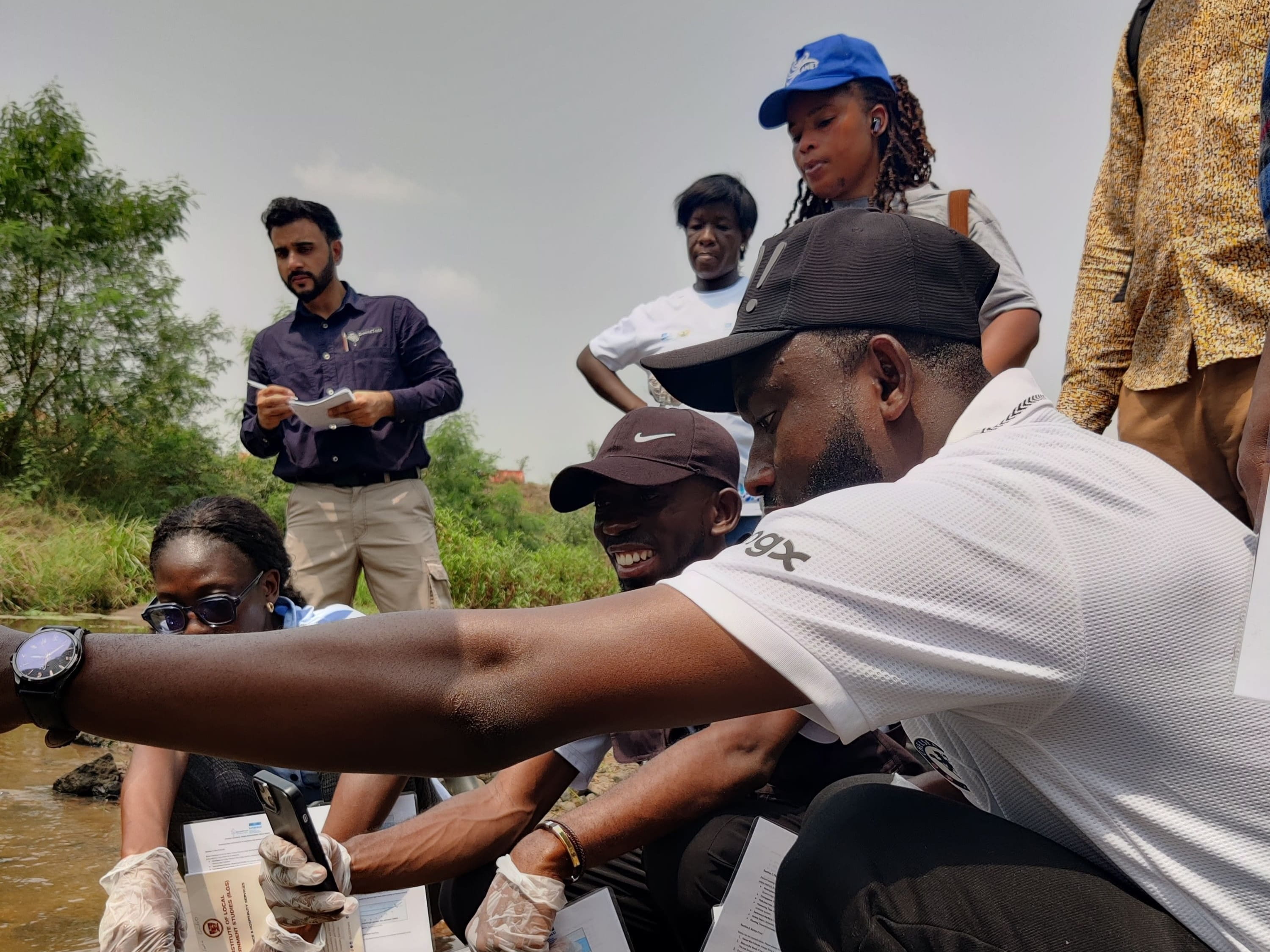
UNESCO trains youth in Ghana on flood and drought prevention
April 9, 2026, 3:04 p.m.
In Ghana, Accra, UNESCO and its partners empower the next generation of leaders to advance community-based hydrological monitoring and strengthen climate resilience.
Across Ghana, where climate change is intensifying the frequency and severity of water-related disasters such as floods and droughts, strengthening hydrological monitoring systems and improving access to reliable river flow data has become essential. These efforts are critical for enhancing early warning systems, supporting informed decision-making, and building resilience to a changing climate. In this context, citizen science, where non-professionals participate in scientific research, is emerging as an innovative approach to complement conventional monitoring networks while actively engaging local communities.
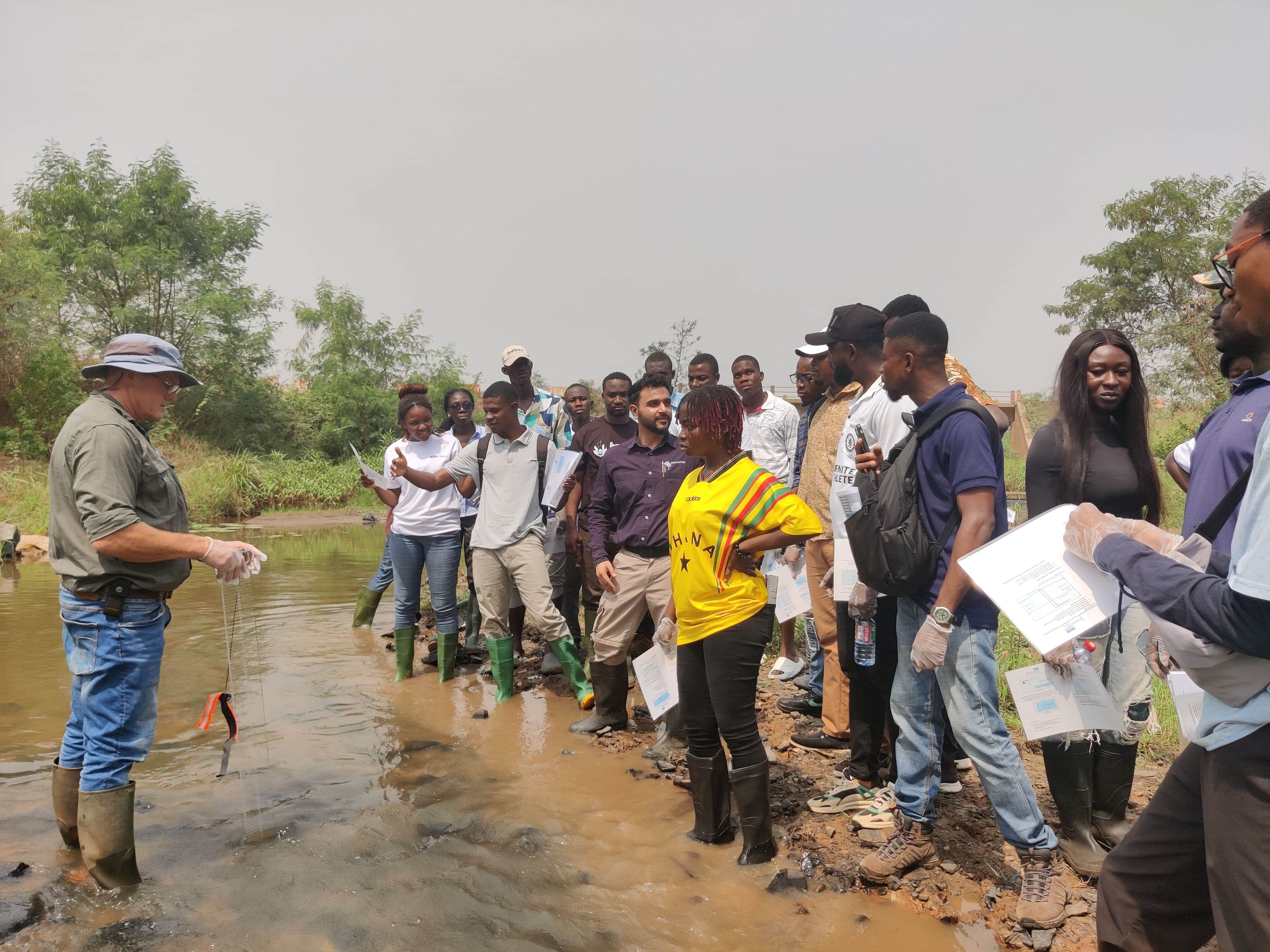
Equipping youth with skills to monitor key river parameters for prevention
UNESCO, through its Intergovernmental Hydrological Programme (IHP), in collaboration with GroundTruth and the Youth Bridge Foundation, organized a three-day training workshop in Ghana to equip young leaders with the knowledge and methodologies needed to engage in river flow monitoring via citizen science. Bringing together youth from diverse regions and backgrounds, the initiative aimed to build local expertise in monitoring key river flow parameters, such as water depth, flow velocity, and discharge. These data are essential to better assess flood and drought risks, strengthening early warning systems, and supporting sustainable water resources management, particularly in the face of increasing climate variability.
"This training strengthened my capacity to not only monitor rivers but to train others, empowering communities with data for resilience, early warning, and sustainable water resource management." - Peter Adu (Youth participant)
Digital tools for scientific data collection
A key highlight of the initiative was the introduction of an innovative methodology known as virtual gauging, developed in collaboration with GroundTruth. This approach enables river flow measurements to be derived from simple video recordings captured on mobile phones, with data processed and shared through an open-access data portal. By using accessible digital tools, this methodology offers a scalable, time- and cost-effective way to expand hydrological monitoring while engaging youth and local communities to actively contribute to scientific data collection.
The initiative also highlighted how citizen science can enhance advanced hydrological monitoring technologies such as Internet of Things (IoT). At an existing monitoring site, near Accra, where an IoT sensor continuously records water depth, the citizen science approach made it possible to turn water level values into a river discharge measurement. This development enables people to know how high the water is, hence possibly preventing floods and significantly improving the value of the monitoring station. This demonstrates how citizen science can complement sensor networks by validating and enriching data and support sensor networks by more informed decision-making for climate resilience and sustainable water management.
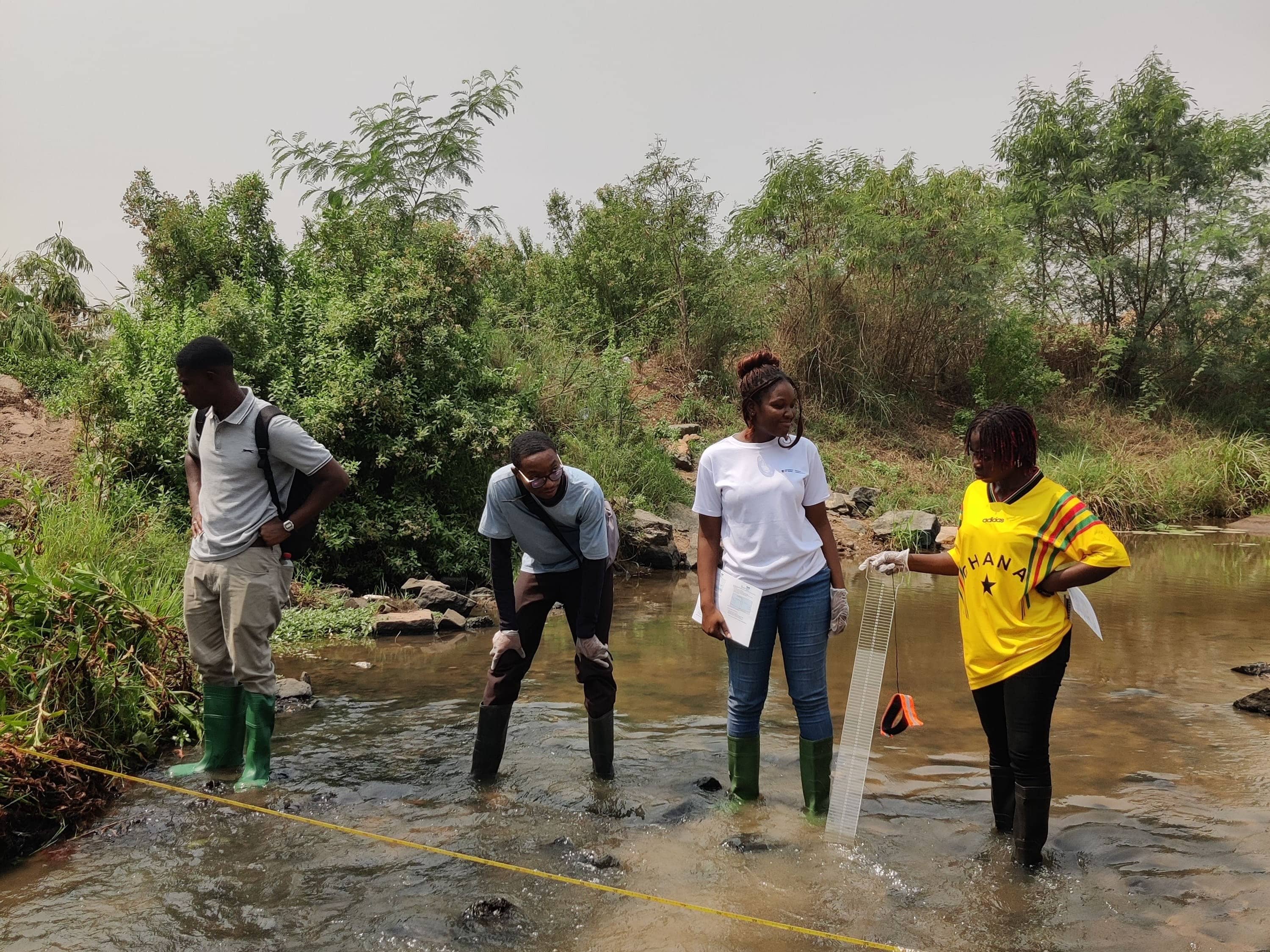
Building a network of young citizen scientists
The training marks an important step toward building a network of youth citizen scientists in Ghana, as participants return to their communities to continue river monitoring and engage other young participants in data collection efforts.
By empowering youth to contribute directly to hydrological monitoring, UNESCO and its partners are helping strengthen climate resilience, data availability, and inclusive water management across the country.
This initiative is part of UNESCO’s Intergovernmental Hydrological Programme project “Strengthening resilience on water-related disasters under climate change for a sustainable society in Ghana”, funded by the Government of Japan.