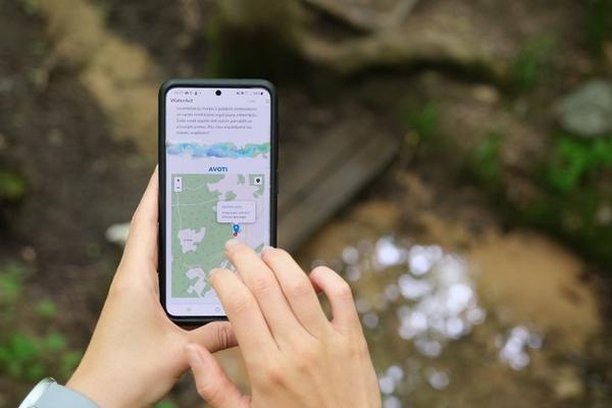
Empowering Communities: A Water Quality Citizen Science Initiative in the Yala River Basin (Kenya)
from 01/07/2024 until 31/08/2025
Water quality degradation in rivers and lakes is increasingly driven by pollution from diverse sources, often overwhelming the natural purification capacity of aquatic ecosystems. These pressures are further intensified by global changes such as urbanization, land use transformation, and climate variability. Despite growing recognition of these challenges, water quality monitoring remains limited in many regions due to financial constraints, technical capacity gaps, and institutional barriers, resulting in insufficient data to support evidence-based decision-making.
This project addresses these challenges through a citizen science initiative in the Yala River Basin, a vital ecosystem in western Kenya covering approximately 3,351 km². The basin provides water for domestic use and agriculture and supports diverse aquatic life, yet it is increasingly affected by deforestation, soil erosion, and pollution. Strengthening local monitoring and environmental stewardship is therefore essential.
The project engage senior high school students and local communities in systematic water quality monitoring at two critical scales. First, students will monitor water quality at the Yala River Basin outlet to better understand aggregated environmental pressures affecting downstream water quality. Second, students from local high schools will monitor water quality at the inlet and outlet of the Yala swamp to assess the wetland’s effectiveness as a nature-based solution for pollution mitigation and water purification.
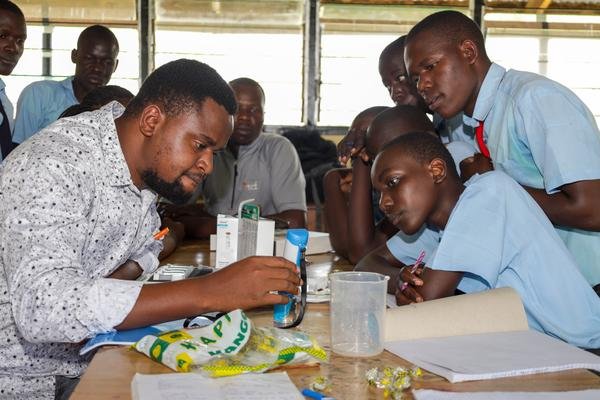
The project combines capacity development with hands-on field monitoring. Participants will receive training through workshops and practical sessions on water quality parameters, sampling protocols, wetland ecology, and data recording. Water sampling will be conducted bi-weekly at strategically selected sites. Monitoring will rely on low-cost and accessible tools, including multiparameter probes (pH, conductivity, salinity, temperature, total dissolved solids), nutrient test strips (nitrate, nitrite, chlorine), phosphate titration kits, turbidity tubes, and mobile-based measurements using the HydroColor application. Data will be recorded using standardized forms and digital tools, including geolocation support.
Collected data will be analyzed to identify trends and potential pollution sources, and to compare inlet and outlet measurements to evaluate wetland filtration performance. The initiative will be implemented through collaboration between Jaramogi Oginga Odinga University of Science and Technology (JOOUST), Vrije Universiteit Brussel (VUB), local high schools, communities, NGOs, and local authorities. An advisory committee of experts will support technical quality and project implementation.
The project also include community outreach through public presentations where students share findings, as well as dissemination through local and social media.
Aim
The overall objective of this project is to strengthen water quality monitoring, environmental awareness, and community engagement in the Yala River Basin through a structured citizen science initiative led by senior high school students and supported by academic and local stakeholders.
Specifically, the project aims to generate consistent, locally owned water quality data in a context where monitoring remains limited due to financial, technical, and institutional constraints.
The project has two core objectives:
-
To monitor water quality at the Yala River Basin outlet, engaging senior high school students to assess the aggregated influence of upstream environmental pressures on downstream water quality. This objective will support the identification of trends and potential pollution sources affecting the basin at scale.
-
To monitor water quality at the inlet and outlet of the Yala swamp, involving local high schools to evaluate the wetland’s effectiveness as a nature-based solution for pollution mitigation. By comparing inlet and outlet water quality data, the project will assess the swamp’s role in improving water quality and regulating nutrient and sediment loads.
Across both objectives, the project wcombine training, hands-on monitoring, and participatory analysis to build practical skills in water quality testing, data recording, interpretation, and communication. The initiative ultimately aims to empower students and communities as active contributors to environmental stewardship, while producing actionable evidence to support local conservation efforts and stakeholder engagement in the Yala River Basin.
Participation & Audience
Target group: The project targets students and teachers from two local high schools in the Yala River Basin: Barkayango and Usenge. These schools are directly involved in the citizen science monitoring activities, including training, monthly water sampling, and standardized data recording at key monitoring sites (the Yala swamp inlet and outlet and the river basin outlet).
Number of participants: 150
Duration of involvement: 1 year
How to participate
Impact
Insights and Highlights
Established a school- and community-based citizen science water quality monitoring initiative in the Yala River Basin, in collaboration with Barkayango and Usenge high schools, Jaramogi Oginga Odinga University of Science and Technology (JOOUST), and Vrije Universiteit Brussel (VUB). Generated locally grounded water quality data through monthly monitoring campaigns at key sites, including the Yala swamp inlet and outlet and the river basin outlet, covering core physicochemical parameters (pH, PO₄, NO₃, EC, turbidity, TDS, salinity, and temperature). Strengthened youth and school capacity in water quality monitoring through hands-on training in sampling techniques, use of low-cost monitoring kits, data recording, and basic interpretation. Assessed the wetland’s role as a nature-based solution by comparing inlet and outlet measurements, supporting evidence generation on the swamp’s filtration and pollution mitigation services. Integrated local knowledge and lived experience through community engagement activities, supporting the documentation of locally perceived pollution pressures and environmental change. Fostered mutual learning and sustained collaboration between students, teachers, community members, and university researchers across Kenya and international partner institutions. Contributed to local environmental stewardship and awareness by strengthening the evidence base available for community dialogue, wetland conservation, and water quality governance in the Yala River Basin.
One of the main challenges encountered during the early stages of the initiative was limited interest and engagement from one of the initially approached schools, which affected the feasibility of implementing the monitoring activities as planned. To address this, the project team adapted the engagement strategy and established collaboration with an alternative school that showed stronger motivation and commitment to participate. This adjustment ensured continuity of the monitoring activities and strengthened overall project ownership among participating students and teachers.
The project uses a combination of school-based, community-based, and public communication to recruit participants, maintain engagement, and share results. Recruitment and coordination take place through direct engagement with Barkayango and Usenge schools, including meetings with school leadership and teachers, followed by training workshops and hands-on sessions that support continued participation throughout the monitoring process. Regular follow-up communication with teachers and student teams is also used to coordinate monthly sampling activities, ensure safe fieldwork, and support consistent data reporting. Communication for outreach and dissemination includes community engagement activities such as local meetings and informal discussions that link monitoring results to local concerns about water quality and wetland conservation. Students also present findings to peers and stakeholders, helping translate monitoring data into locally meaningful messages. In addition, social media and local media channels are used to share project progress and highlight student contributions, alongside periodic project reporting (quarterly updates and a final report) shared with partner institutions and relevant local actors.
What makes this project particularly special is its strong emphasis on youth-led citizen science and locally grounded monitoring in a basin where water quality data are often scarce. The initiative demonstrated that meaningful water quality monitoring can be implemented through low-cost tools when students are trusted as capable partners and supported through structured training. One of the aspects we are most proud of is that the project became a powerful mutual learning process. We initially underestimated the level of knowledge, motivation, and readiness of local students. In practice, students were highly prepared, asked insightful questions, and showed strong commitment to participating in monthly monitoring activities. Their engagement strengthened the quality of the data collected and reinforced the educational value of the initiative. A key lesson that can be shared with others is the importance of recognizing students not only as “learners” but also as active contributors to environmental knowledge and stewardship. The project also offers a replicable approach combining simple water quality kits, structured sampling routines, and school-based participation, which can be adapted to other river basins and wetland contexts.
About funding
Funding bodies: VLIR UOS AXA Reseach Fund
Coordinator
Vrije Universiteit Brussel
Academic
Other Organisations involved

Jaramogi Oginga Odinga Unive…
Academic
 Go to Project
Water type
Keywords
Science Topics
Tags
Difficulty Level
Participation tasks
Location
Contact
Similar projects
PreserVamos
No organization
13/11/2025
Plastic Pirates - Go Europe!
No organization
01/10/2025
Home River Bioblitz
No organization
11/02/2026
AquaCoLab - Burgos
24/11/2025
CrowdWater
27/10/2025