KdUINO
from 01/01/2015
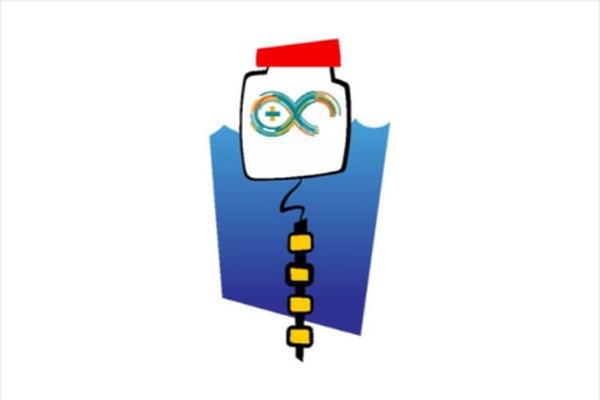
KdUINO is a low-cost, open-source, Do-It-Yourself (DIY) citizen science project designed to monitor water transparency in aquatic ecosystems. The project enables citizens and researchers to build and deploy their own buoy-based optical instruments to measure the diffuse attenuation coefficient (Kd), a key indicator of underwater light availability, water quality, and ecosystem health.
Developed at the Institute of Marine Sciences (ICM-CSIC), KdUINO originally consists of an Arduino-based system equipped with light sensors placed at different depths in the water column. By measuring how light attenuates with depth, the system provides objective and continuous information on water transparency, which is closely linked to phytoplankton dynamics, suspended matter, and dissolved substances affecting marine and freshwater ecosystems.
Over time, the KdUINO buoy has evolved into a family of instruments, including the KduPRO, which features a modular design, increased robustness, and multispectral capabilities. These instruments measure photosynthetically active radiation (PAR), specific spectral bands (red, green, blue), and multispectral wavelengths in the newer versions.
KdUINO and its derivatives have been deployed in coastal and inland waters, including urban coastal environments and lakes. The project supports citizen participation through workshops, educational activities, and participatory monitoring networks, contributing to increased environmental awareness and improved spatial and temporal coverage of in situ water quality observations.
By generating high-quality in situ data that complement satellite observations, the project supports evidence-based water and marine management and contributes directly to Sustainable Development Goal 6 (Clean Water and Sanitation) by improving freshwater and coastal water quality monitoring, and to Sustainable Development Goal 14 (Life Below Water) by promoting the conservation and sustainable use of oceans, seas, and coastal ecosystems.
Aim
The aim of the KdUINO project is to empower citizens and researchers to monitor water transparency using low-cost, open-source technologies, improving the spatial and temporal coverage of in situ water quality observations.
Participation & Audience
Target group: Citizens, students (secondary school and university), teachers, local communities, researchers, environmental monitoring practitioners, and people who regularly practice aquatic sports such as paddle surf, kayaking, sailing, or other recreational water activities.
Number of participants: 11-50
Duration of involvement: From single workshops to long-term deployments (weeks to months).
How to participate
Participants can join the project by taking part in workshops, building their own KdUINO-based instruments, deploying them in local water bodies, and collecting water transparency data. Educational materials, user guides, and technical documentation are provided to support participation:
Impact
Insights and Highlights
Development of a validated low-cost DIY instrument for water transparency monitoring; successful deployments in coastal and inland waters; peer-reviewed scientific publications; integration into European research projects such as CITCLOPS and MONOCLE; engagement of students and citizens in real scientific monitoring.
Challenges included sensor calibration, biofouling, and deployment stability in dynamic coastal environments. These were addressed through modular design improvements, standardized protocols, and automated quality control procedures.
Workshops Educational activities Demonstrations Online documentation
KdUINO demonstrates that citizen-built instruments can provide scientifically reliable data comparable to professional radiometers, significantly increasing spatial and temporal monitoring coverage at a fraction of the cost.
About funding
Funding bodies: European Union
Funding program: CITCLOPS -> 7th Framework Programme (FP7) grant agreement No 308469, MONOCLE -> European Union’s Horizon 2020 (EU H2020) grant agreement No 776480
Coordinator
Institute of Marine Sciences …
Governmental
Similar projects

PreserVamos
No organization
13/11/2025
CrowdWater
27/10/2025
Plastic Pirates - Go Europe!
No organization
01/10/2025
AquaCoLab - Burgos
24/11/2025
Home River Bioblitz
No organization
11/02/2026
Science In and with Society: reducing emissions of TExtile Microplastics in the NetherLands (SISTEM-NL)
27/11/2025